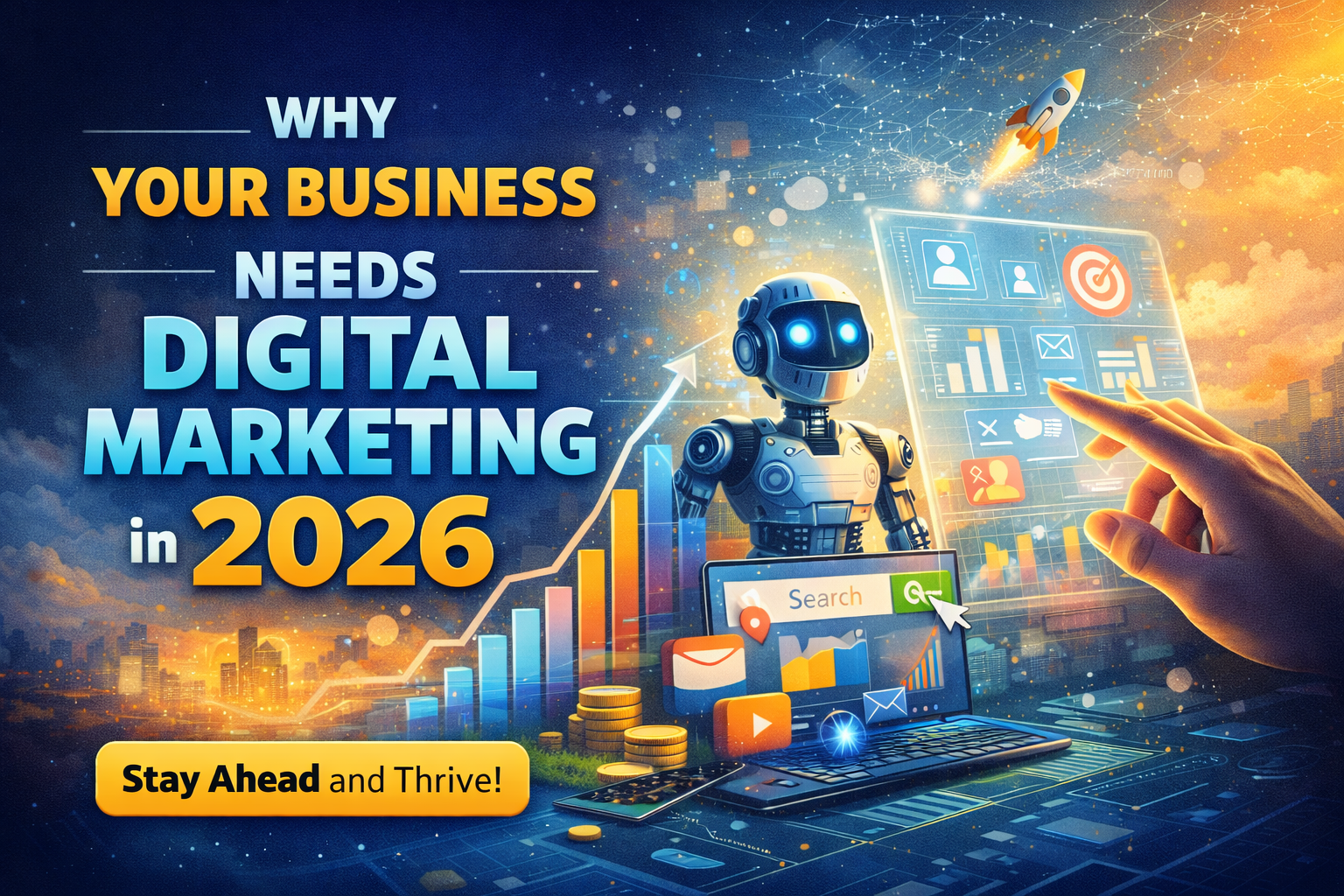
In today’s digital-first world, having a strong online presence isn’t just an advantage—it’s essential for business survival and growth. As we navigate through 2026, digital marketing has become the cornerstone of successful business strategies across all industries. Whether you’re a startup or an established enterprise, understanding why digital marketing matters can be the difference between thriving and merely surviving.
This guide is for small businesses, startups, and local service brands that want to use SEO, social media, and AI-powered tools in 2026 to get found online and generate consistent leads.
The Digital Transformation of Consumer Behavior
Consumer behavior has fundamentally shifted over the past few years. According to recent statistics, over 5.3 billion people worldwide are active internet users, spending an average of 6-7 hours online daily. This massive digital migration means your customers are online—researching, comparing, and making purchasing decisions in digital spaces.
Traditional marketing methods like print ads, billboards, and TV commercials are no longer sufficient to reach your target audience effectively. Today’s consumers expect businesses to meet them where they are: on search engines, social media platforms, email inboxes, and mobile apps.
Key Reasons Why Your Business Needs Digital Marketing in 2026
1. Cost-Effective Marketing with Higher ROI
Digital marketing offers exceptional value compared to traditional marketing channels. Small businesses with limited budgets can compete with larger corporations through strategic digital campaigns. Whether it’s pay-per-click advertising, social media marketing, or email campaigns, digital marketing allows you to:
- Set precise budgets and control spending
- Track every dollar invested and measure results in real-time
- Adjust campaigns instantly based on performance data
- Target specific audiences without wasting resources on uninterested viewers
Studies show that digital marketing campaigns typically deliver 2-3 times higher ROI compared to traditional marketing methods, making it an intelligent investment for businesses of all sizes.
2. Precise Audience Targeting and Personalization
One of digital marketing’s most powerful advantages is the ability to target specific demographics, interests, behaviors, and locations with laser precision. Modern digital marketing tools allow you to:
- Create detailed customer personas based on data analytics
- Segment audiences for personalized messaging
- Retarget website visitors who didn’t convert initially
- Deliver customized content based on user behavior and preferences
This level of personalization wasn’t possible with traditional marketing. According to HubSpot, personalized marketing campaigns can increase conversion rates by up to 202%.
3. Measurable Results and Data-Driven Decisions
Unlike traditional marketing where measuring effectiveness can be challenging, digital marketing provides comprehensive analytics and insights. You can track:
- Website traffic and user behavior
- Conversion rates and sales attribution
- Email open rates and click-through rates
- Social media engagement and reach
- Cost per acquisition and customer lifetime value
This data-driven approach enables businesses to make informed decisions, optimize campaigns continuously, and allocate resources to the most effective channels. Tools like Google Analytics provide detailed insights that help you understand what’s working and what needs improvement.
4. Enhanced Customer Engagement and Relationship Building
Digital marketing opens up multiple channels for direct communication with your customers. Through social media, email marketing, chatbots, and content marketing, you can:
- Respond to customer queries instantly
- Build communities around your brand
- Gather feedback and reviews
- Provide valuable content that educates and entertains
- Create two-way conversations that foster loyalty
This continuous engagement helps build trust, increase brand loyalty, and turn customers into brand advocates who promote your business organically.
5. Global Reach with Local Targeting
Digital marketing breaks down geographical barriers, allowing even small local businesses to reach global audiences. At the same time, you can hyper-target local customers through:
- Local SEO optimization for Google My Business
- Geo-targeted advertising campaigns
- Location-based social media marketing
- Regional content strategies
Whether you want to expand internationally or dominate your local market, digital marketing provides the tools and flexibility to achieve both objectives.
6. Stay Competitive in Your Industry
Your competitors are already using digital marketing. If you’re not actively engaging in digital marketing, you’re essentially handing market share to your competition. In 2026, businesses that invest in digital marketing strategies gain significant advantages:
- Increased brand visibility online
- Better positioning in search engine results
- Stronger social media presence
- More touchpoints with potential customers
Staying competitive requires not just having a digital presence, but actively optimizing and improving it to outperform competitors.
7. Mobile-First Consumer Behavior
With over 60% of internet traffic now coming from mobile devices, digital marketing is essential for reaching customers where they spend most of their time. Mobile optimization includes:
- Responsive website design
- Mobile-friendly email campaigns
- Social media marketing (primarily accessed via mobile)
- Location-based mobile advertising
- App-based marketing strategies
Digital marketing strategies that prioritize mobile experience see significantly higher engagement and conversion rates.
Essential Digital Marketing Channels for 2026
To maximize your digital marketing effectiveness, focus on these key channels:
Search Engine Optimization (SEO): Optimize your website to rank higher in search results and attract organic traffic. SEO remains one of the most valuable long-term digital marketing investments.
Content Marketing: Create valuable, relevant content that attracts and engages your target audience. Quality content establishes authority and builds trust.
Social Media Marketing: Engage with customers on platforms where they’re most active—Instagram, Facebook, LinkedIn, Twitter, and emerging platforms.
Email Marketing: Build direct relationships with subscribers through personalized email campaigns. Email marketing continues to deliver the highest ROI among digital channels.
Pay-Per-Click (PPC) Advertising: Get immediate visibility through Google Ads, social media ads, and display advertising with precise targeting options.
Video Marketing: Leverage platforms like YouTube, TikTok, and Instagram Reels to create engaging visual content that resonates with modern audiences.
Getting Started with Digital Marketing
If you’re new to digital marketing or looking to improve your current efforts, here’s how to begin:
- Define Clear Goals: Identify what you want to achieve—brand awareness, lead generation, sales, or customer retention.
- Know Your Audience: Research and understand your target customers’ demographics, behaviors, and preferences.
- Build a Strong Online Presence: Start with a professional, mobile-optimized website as your digital foundation.
- Create a Content Strategy: Plan valuable content that addresses your audience’s needs and questions.
- Choose the Right Channels: Focus on platforms where your target audience spends their time.
- Measure and Optimize: Use analytics tools to track performance and continuously improve your strategies.
For comprehensive guidance on digital marketing strategies, check out HubSpot’s Digital Marketing Resources and Google’s Digital Garage for free courses and certifications.
Conclusion
Digital marketing is no longer optional for businesses in 2026—it’s a fundamental requirement for growth and sustainability. From cost-effectiveness and precise targeting to measurable results and global reach, digital marketing offers unparalleled advantages over traditional methods.
The businesses that thrive in today’s competitive landscape are those that embrace digital transformation and continuously adapt their marketing strategies to evolving consumer behaviors and technological advancements. Whether you’re just starting your digital marketing journey or looking to optimize existing efforts, the time to invest in digital marketing is now.
By leveraging the right digital marketing channels, creating valuable content, and maintaining a data-driven approach, your business can achieve sustainable growth, build lasting customer relationships, and stay ahead of the competition in 2026 and beyond.